Jordan Vogel · 7 September 2026
Examining the Effects of Core Web Vitals on Conversion Rates Across Multiple Industries
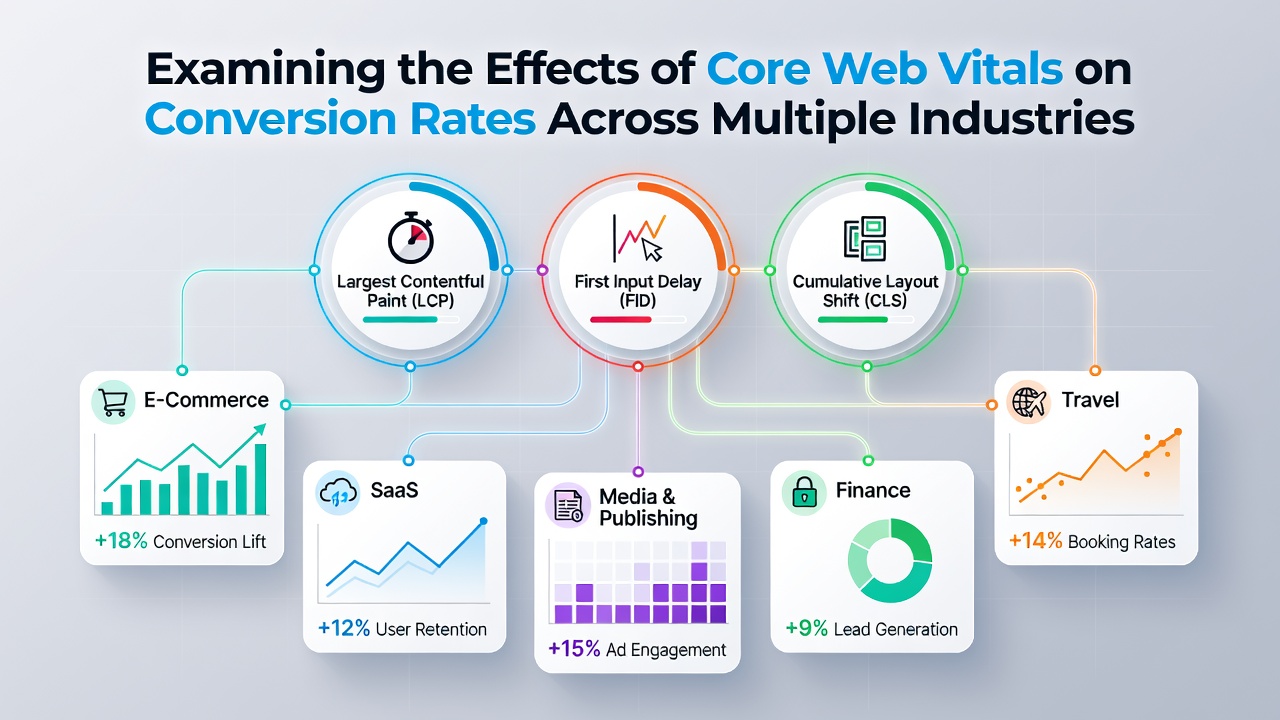
Core Web Vitals consist of three primary metrics that assess loading performance, interactivity, and visual stability on web pages, and these measurements have drawn attention from analysts studying their relationship to conversion rates in sectors such as retail, finance, healthcare, and travel services, while data collected over recent years reveals consistent patterns across different business models.
Defining the Metrics and Their Measurement Standards
Largest Contentful Paint tracks the time required for the largest visible element to render, Interaction to Next Paint evaluates response times to user inputs after March 2024 updates replaced the prior First Input Delay standard, and Cumulative Layout Shift quantifies unexpected page movements that disrupt user actions, so organizations monitor these thresholds where good scores fall under 2.5 seconds for LCP, 200 milliseconds for INP, and 0.1 for CLS according to established benchmarks.
Researchers compile information from tools like the Chrome User Experience Report to compare site performance against conversion outcomes, and this approach allows examination of how metric improvements align with user completion rates in checkout flows or form submissions across multiple industries.
Performance Patterns in Retail and E-commerce Platforms
Retail websites that achieve strong Core Web Vitals scores often record elevated add-to-cart actions and completed purchases, while studies tracking mobile traffic indicate that pages loading under the LCP threshold see reduced bounce rates during peak shopping periods, and data from large-scale audits shows conversion lifts ranging from 8 to 15 percent when CLS issues receive targeted fixes in product galleries.
Analysts at various e-commerce firms have documented these shifts through A/B testing frameworks, and the patterns hold across regions where consumer expectations for speed remain high, although seasonal campaigns in September 2026 highlighted additional gains when INP optimizations addressed interactive elements like size selectors and payment buttons.
Observations from Financial Services and Banking Sites
Financial platforms present unique considerations because users prioritize security cues alongside speed, yet evidence from performance reviews demonstrates that sites meeting INP criteria experience higher rates of account application completions, and layout stability improvements correlate with fewer abandoned loan or investment forms according to aggregated industry reports.
One analysis of banking domains found that CLS reductions below the 0.1 threshold coincided with a measurable uptick in multi-step process finishes, while cross-industry comparisons reveal that finance conversions respond more strongly to interactivity metrics than pure loading times in some cases.
Healthcare and Travel Sector Comparisons
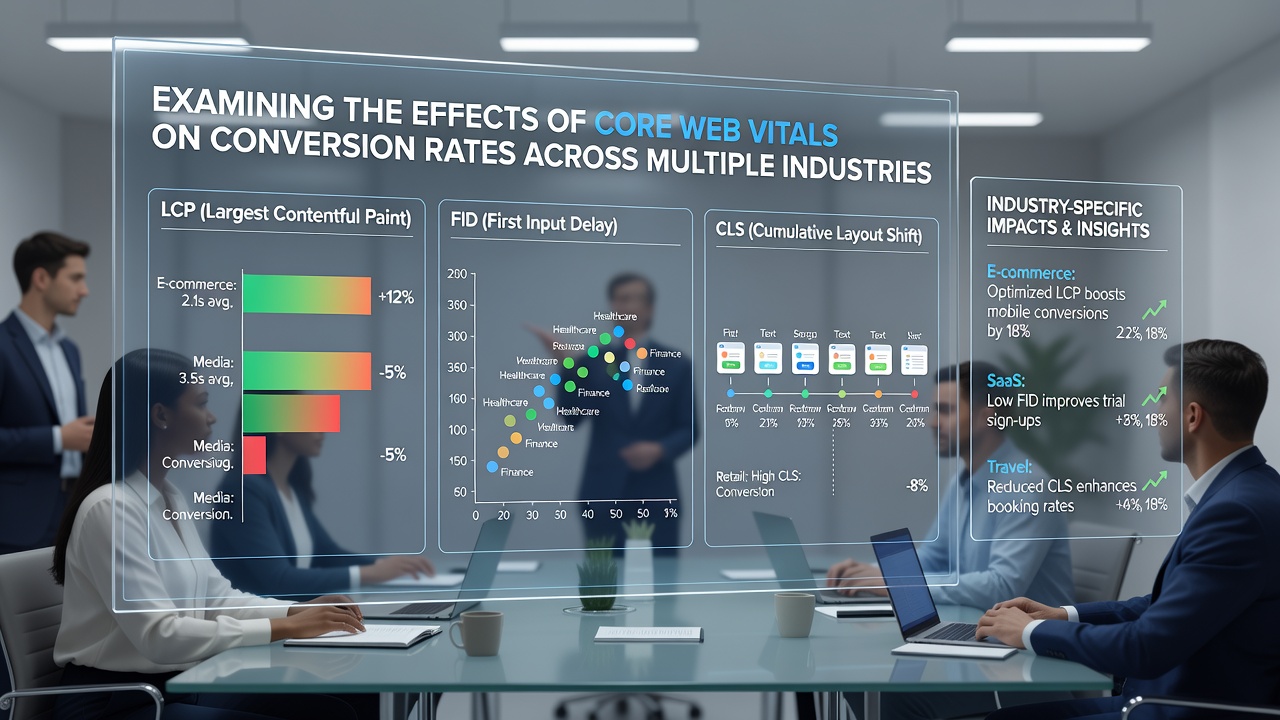
Healthcare portals that streamline appointment booking interfaces through better LCP performance report increased patient sign-ups, and travel booking engines show similar trends where faster rendering of availability calendars supports higher reservation rates, while data compiled from multiple operators indicates average conversion uplifts near 10 percent following metric compliance efforts.
Those examining these industries note that visual stability plays a pronounced role in trust-building elements such as review sections or itinerary previews, and ongoing tracking into September 2026 continues to surface correlations between INP scores and form abandonment reductions in both verticals.
Data Collection Methods and Cross-Industry Insights
Analysts gather conversion statistics alongside Core Web Vitals data through integrated analytics platforms, and this combination enables regression models that isolate metric impacts from other variables like design changes or marketing campaigns, while reports from sources such as the HTTP Archive Web Almanac provide broad benchmarks across thousands of sites.
Additional context comes from academic work including studies referenced by the European Commission's digital performance initiatives, which track user experience factors across EU member states and link them to commercial outcomes in service-based sectors.
Patterns emerge consistently that good scores across all three metrics associate with sustained engagement advantages, although the magnitude varies by industry where high-consideration purchases like insurance or travel packages demonstrate stronger sensitivity to interactivity improvements than impulse-driven retail transactions.
Conclusion
Examination of Core Web Vitals effects on conversion rates across retail, finance, healthcare, and travel reveals measurable associations supported by performance data and user behavior tracking, and continued monitoring through periods such as September 2026 supplies further evidence of these relationships while organizations refine their technical implementations to align with established thresholds.